

Weingut Bastgen
The fame of the top villages in the Mosel is probably due in large part to the reputation of certain individual estates and single vineyards. We are thus familiar with Wehlen and Bernkastel to name the most obvious ones. But Kesten has remained stubbornly below the radar, never having had a big-name grower to promote its claims. Yet it clearly has vineyard sites that would appear to have equal potential to the finest. Its Paulinsberg is simply an extension in fact of the much more famous Brauneberger Juffer. Back in 1868 its grapes fetched the same price in the market.
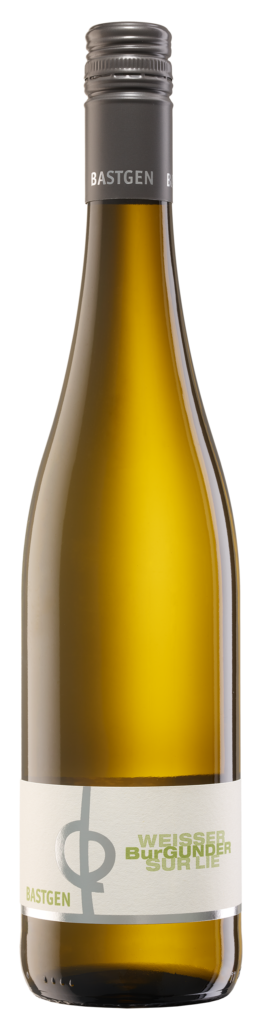
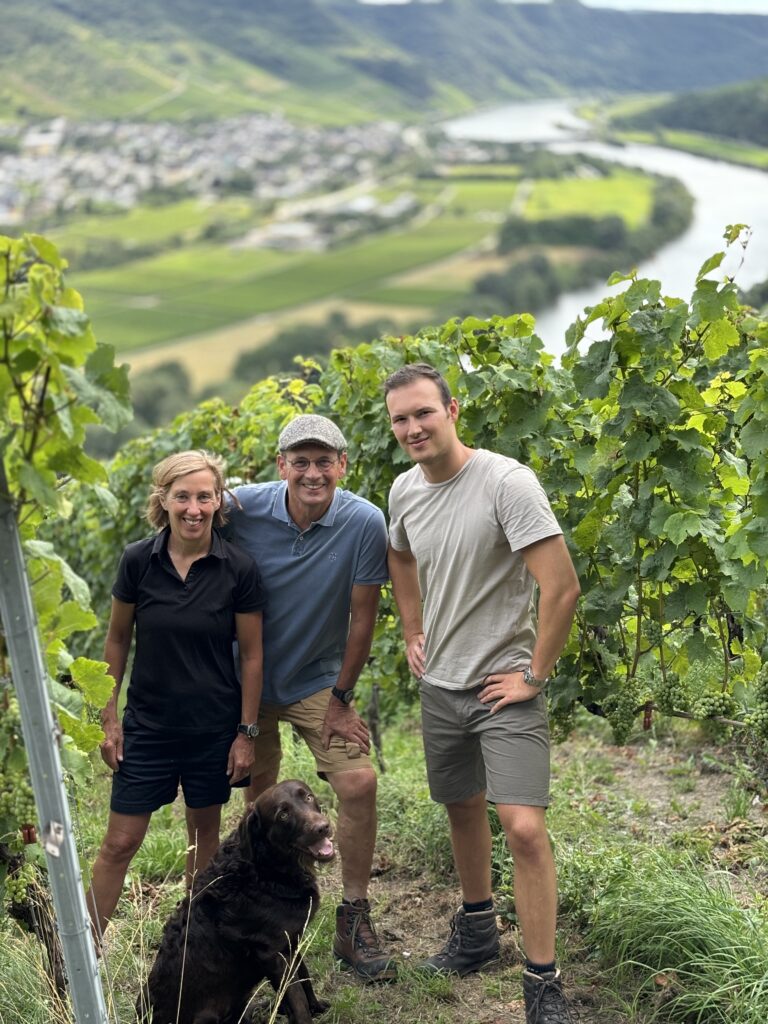
Oddly enough it was not Riesling that initially sparked my interest in Weingut Bastgen, but Weissburgunder, a.k.a. Pinot Blanc, a member of the Pinot family for which we have a particular affection, although its profile has always remained much lower than the Noir and Gris mutations. When I first started a conversation with Paul Vogel, I told him that my curiosity had been sparked by the Pinot Blanc as I had never come across an example from the Mosel, whereupon he said that his father Armin was the first grower to have planted it there some 32 years ago shortly after taking over the estate from his own parents in 1993.
The estate extends to just 3.5 hectares, with 75% of the land on the typically steep Mosel slopes and 25% on flat alluvial soils close to the river. The latter area was previously planted to Muller-Thurgau, an unexciting grape, so Armin decided to replace it with Pinot Blanc. The variety has now become, if not actually trendy, at least popular and easy enough to find in the winebars of Trier as I discovered on my brief visit last September. It is easy to understand why it has taken off, since it offers a style of dry wine that invites comparison with decent Chablis. They have learnt by experience how to achieve a good result with this variety which he says is harder work than Riesling. It is important to harvest it before it becomes too ripe and they rigidly avoid any malolactic fermentation, using a mixture of stainless steel and neutral oak ‘fuder’ in which the wine is aged for six months on its lees.
But while the Pinot Blanc here is hugely satisfactory, we need to remember that the steep slope vineyards are where we find the Riesling and that is still the grape that makes Mosel wine unique. If Armin Vogel is proud of one of his wines above all the rest then it seems to be the Blauschiefer that is dearest to his heart and soul and I completely understand why. This is a Riesling Trocken in character that has completely converted me to the possibility of achieving a perfect balance in this style. Not over intensely fruity, essentially discreet, it serves as a perfect aperitif yet also proves remarkably versatile with food. For those readers who are interested in technical analysis, the stats show total acidity at 7.5, residual sugar at 6g/l and alcohol at 11.5%. It is unlike any other wine in our catalogue.
Armin Vogel’s ambition with the Blauschiefer is to produce a quintessential and authentic expression of Mosel wine. I suggested to him that I felt that the aim was for ‘Einfachheit’, i.e. simplicity. To make a virtue out of simplicity is not at all the same thing as being facile by simply dumbing down in a sort of compromise to try and please everyone on the planet. It actually requires a certain degree of courage. Perhaps he is thinking of this wine as the ideal Platonic form of Mosel Riesling. In Armin Vogel I detect a courageous and defiant determination to play a part in restoring the reputation of true Mosel wine and helping to illustrate the unique, poetical magic and spirit that is inherent in Mosel wine culture. In our small way we will do what we can to help, confirmed in our belief that there is no finer expression of the Riesling grape than from the precipitous, slatey terraces of the Mosel valley.
Wines
 Riesling Blauschiefer Trocken
Riesling Blauschiefer Trocken

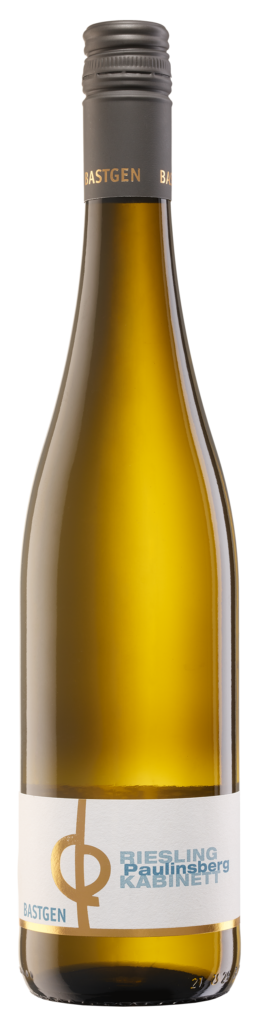
Riesling Paulinsberg Kabinett
Riesling Paulinsberg Kabinett
Weissburgunder
Weissburgunder